Personalized Medical Care & Dedicated International Patient Concierge

Medical Guide
Why Newstar Clinic Puts an Anesthesiologist on the Team
Newstar Clinic includes a Korean board-certified anesthesiologist in its treatment team. Learn how monitoring and safety oversight support aesthetic care.
Schedule a ConsultationWhy Newstar Clinic Includes a Board-Certified Anesthesiologist on Every Treatment Team
Medically reviewed by Dr. Younghwan Choi, Korean Board-Certified Anesthesiologist
When most people picture an aesthetic clinic, they think of injectors, lasers, and comfortable treatment rooms rather than the specialists who monitor a patient's wellbeing during care. Newstar Clinic, an aesthetic and cosmetic-dermatology clinic in Gangnam, Seoul, takes a different view: patient safety is a discipline in its own right, and it belongs at the planning table alongside the procedure itself. That is why the clinic's team includes Dr. Younghwan Choi, a Korean board-certified anesthesiologist, whose training in monitoring, assessment, and emergency readiness informs the clinic's overall safety framework. This article explains what that means in practical terms, why anesthesiology expertise is relevant even for non-surgical treatments, and what questions any patient should feel free to ask before care.
What a Board-Certified Anesthesiologist Actually Does
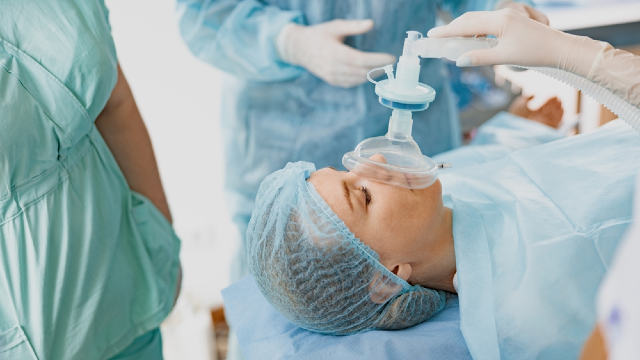
Anesthesiology is a medical specialty devoted to keeping patients safe, comfortable, and physiologically stable during procedures. While the public tends to associate anesthesiologists only with operating rooms and general anesthesia, the specialty is much broader. Anesthesiologists are trained to assess a patient's overall health before any intervention, to anticipate how the body may respond to medications and stress, to monitor vital signs continuously, and to recognize and respond quickly if something changes.
Dr. Younghwan Choi is a board-certified anesthesiologist and a Director at Newstar Clinic. His background spans body contouring and non-surgical aesthetic procedures, and across his career he has served in director or vice-director roles at several aesthetic clinics. His clinical approach emphasizes patient safety, careful treatment planning, and individualized care, with the goal of helping patients pursue balanced, natural-looking outcomes without taking unnecessary risks.
It is worth being precise about the credential. Dr. Choi holds a Korean board certification in anesthesiology, awarded through Korea's medical specialty system. This is a genuine, documented specialty credential, and it is distinct from the certifications issued by American boards. Throughout this article, the term "board-certified anesthesiologist" refers to that Korean board credential, not to any US board. Patients who are used to the American system will find the comparison useful, and we cover it in a dedicated section below.
Why Anesthesiology Expertise Matters in an Aesthetic Clinic
A reasonable question is: if most aesthetic treatments are injections and energy-based devices, why does anesthesiology matter at all? The answer is that the value of the specialty lies less in the drugs and more in the mindset and training. Anesthesiologists are, in effect, trained to plan for the small percentage of moments that do not go as expected, and to keep the routine ninety-nine percent uneventful.
Several elements of anesthesiology training translate directly to a busy aesthetic practice. The first is pre-procedure assessment. Before any treatment, a thorough review of a patient's medical history, medications, allergies, and general health helps identify anyone who may need extra caution. The second is monitoring: watching for subtle changes and being ready to act rather than react. The third is pain and comfort management, which shapes how topical and local anesthesia are used so that patients are comfortable without being over-medicated. The fourth is emergency preparedness, meaning that a clinic has trained personnel and a clear plan should a rare adverse event occur.
None of this requires that a clinic perform major surgery under general anesthesia. It simply means that safety oversight is treated as a professional discipline rather than an afterthought. At Newstar Clinic, that oversight is one part of a broader, safety-first philosophy in which every treatment is evaluated for medical necessity and appropriateness before it is recommended, and unnecessary procedures are avoided. You can read more about the clinic's overall approach on the Newstar Clinic website.
The Team-Based Safety Model at Newstar Clinic
Newstar Clinic operates with a six-physician team and a 1:1 personalized care model, in which a patient works closely with a doctor to build a plan that fits their anatomy and goals. Having an anesthesiologist within that team is not about adding sedation to routine treatments; it is about embedding safety expertise into how the clinic thinks and plans.
In practice, a team-based safety model means that different kinds of expertise reinforce one another. A dermatologist and the clinic's physicians bring their knowledge of skin, injectables, and energy devices. An anesthesiologist brings a complementary lens focused on patient assessment, monitoring, and readiness. When these perspectives sit within the same team, protocols tend to be more conservative and more thoroughly considered, because more than one type of specialist has reason to ask "is this appropriate and safe for this particular patient?"
This model also reflects a broader principle in medicine: qualifications and structure matter to safety. Independent bodies that certify physicians describe board certification as evidence that a doctor has gone beyond basic training to demonstrate proficiency in a specialty, and professional surgical societies stress that the qualifications of the people delivering care are central to patient safety. Newstar Clinic's decision to include a board-certified anesthesiologist on the team is consistent with that principle, applied to a non-surgical, aesthetic setting.
Understanding Anesthesia and Sedation in Non-Surgical Treatments
Most aesthetic and cosmetic-dermatology treatments do not require sedation at all. Many injectable and laser-based procedures are performed using topical anesthetic cream or local anesthesia to keep patients comfortable. For example, a common protocol for injectable treatments includes applying a numbing cream to the skin before the procedure. These approaches are widely used precisely because they are effective and carry a favorable safety profile for suitable candidates.
It is still helpful to understand what "procedural sedation" means as a concept, because it clarifies why anesthesiology expertise is valuable even when sedation is not routinely used. Procedural sedation refers to giving sedative, anxiety-reducing, or pain-relieving medications so that a patient can tolerate a procedure that a fully conscious person might find difficult. Medical references emphasize that whenever sedation is used, a trained provider should perform a thorough evaluation beforehand, including an assessment of the airway and medical history, and should monitor the patient throughout. The deeper the level of sedation, the more monitoring and preparedness are required.
The takeaway for patients is twofold. First, you should never assume a treatment involves sedation; ask what form of anesthesia, if any, will be used. Second, if any level of sedation is ever involved in a plan, it should be accompanied by proper assessment, monitoring, and trained personnel. An anesthesiologist's presence on a team is one signal that a clinic takes these standards seriously. Newstar Clinic frames anesthesia and comfort measures as part of an individualized plan discussed during consultation, and patients are encouraged to raise questions early through the clinic's contact page.
Realistic Risks of Aesthetic Procedures
Being honest about risk is part of a safety-first philosophy. No medical treatment is entirely without risk, and results vary from person to person. Understanding realistic risks helps patients make informed decisions and recognize the value of careful assessment and monitoring.
Injectable treatments such as dermal fillers can cause common, usually temporary effects like swelling, redness, tenderness, bruising, and firmness at the treated site. Regulators also describe less common but more serious risks, including infection, lumps or nodules, and, most seriously, unintentional injection into a blood vessel. Injection into a vessel is the most concerning filler risk because it can block blood supply and, in rare cases, lead to tissue damage, vision problems, or other serious complications. This is one reason that anatomical knowledge, careful technique, and readiness to respond all matter.
Neuromodulator treatments such as botulinum toxin ("Botox") are also generally well tolerated when properly administered, but they carry their own considerations, and their effects are temporary, typically lasting a few months. Energy-based devices, lasers, and other aesthetic procedures each have their own risk profiles, from redness and swelling to less common effects. Some side effects may appear soon after a procedure, while others can appear later. None of these facts should frighten a suitable candidate away from care; rather, they underscore why pre-treatment assessment, appropriate patient selection, and monitoring are worthwhile, and why a clinic benefits from having safety expertise built into its team.
Questions Every Patient Should Feel Free to Ask
One of the most useful things a patient can do is treat a consultation as a two-way conversation. A responsible clinic will welcome questions about safety, because informed patients tend to have better experiences and more realistic expectations. Consider asking the following before any aesthetic treatment:
- Who will be performing my procedure, and what are their qualifications?
- What form of anesthesia or numbing, if any, will be used, and why?
- If any sedation is involved, how will I be monitored, and who is trained to respond in an emergency?
- What are the realistic risks and side effects for this specific treatment and for me specifically?
- What happens if I have a reaction or a complication, and how does the clinic follow up?
- Is this treatment medically appropriate for my goals, or is there a more conservative option?
These questions are not confrontational; they are exactly what a safety-minded team expects. Newstar Clinic's model, which pairs each patient with a physician and includes anesthesiology expertise on the team, is designed to make these conversations straightforward.
Korean Board Certification in Context for International Patients
International patients, especially those from the United States, often want to understand how Korean credentials compare with the ones they know at home. It helps to separate two ideas: the credential itself, and the standards behind it.
In the United States, specialty board certification is coordinated through recognized member boards, and certifying organizations describe it as an independent evaluation of a physician's knowledge and skills to practice safely and effectively in a specialty. It is presented as a trusted signal for patients selecting a provider, and it is not the same thing as a basic medical license. Korea has its own specialty board system, and Dr. Choi's certification in anesthesiology comes through that Korean system.
The important point is that a Korean board certification is a real specialty credential earned through Korea's medical training and examination structure; it should not be described as a US or American board credential, and Newstar Clinic does not make that claim. Likewise, industry titles that appear in aesthetic medicine, such as "Key Opinion Leader," "Expert," or "Medical Advisor," are professional or educational appointments from manufacturers and are not board certifications. Being clear about these distinctions is part of treating patients honestly. It also helps international patients calibrate their expectations: a genuine specialty board credential in anesthesiology is meaningful, and it stands on its own without being overstated.
What This Means for International Patients
For patients traveling from abroad, the presence of a board-certified anesthesiologist on the team is one of several practical signals worth weighing alongside a clinic's communication, transparency, and follow-up care. Newstar Clinic is a Ministry of Health and Welfare (MOHW) Registered Medical Institution for Attracting Foreign Patients, which is a Korean government registration for clinics serving international patients. This registration is a Korean regulatory designation; it is not the same as US accreditation or international hospital accreditation such as JCI, and it is not a guarantee of any particular outcome.
The clinic also offers English-language support, which matters a great deal for safety. Clear communication about medical history, allergies, medications, and expectations reduces the chance of misunderstandings that can affect safety and satisfaction. If you are considering treatment, the most productive next step is a consultation in which you can ask the questions listed above, share your full medical history, and receive an individualized plan. You can begin that conversation through the clinic's contact page, and you can learn more about its services and philosophy on the main website.
Safety Is a Process, Not a Single Feature
It would be misleading to suggest that any one element, including having an anesthesiologist on staff, makes a clinic "safe" on its own. Safety in aesthetic medicine is a process that runs from the first consultation to the final follow-up. It includes honest candidacy assessment, so that patients who are not good candidates for a given treatment are told so; appropriate technique and product selection; comfort and anesthesia measures matched to the procedure; observation during and after treatment; and a clear plan for managing any complication that arises. Each of these steps is a link in a chain, and a chain is only as strong as its weakest link.
This is why Newstar Clinic frames safety as a shared responsibility across its team rather than as a marketing headline. A board-certified anesthesiologist strengthens one part of that chain, particularly the parts concerned with patient assessment, monitoring, and readiness. The dermatologist and physicians strengthen others. The 1:1 care model ties them together by keeping a single physician accountable for each patient's plan. No arrangement removes risk entirely, and results always vary, but a process-oriented approach is what responsible aesthetic care looks like in practice. The clinic makes no claim to be the safest or best; it aims to be transparent about how it works so patients can decide for themselves.
The Bottom Line
- Newstar Clinic includes Dr. Younghwan Choi, a Korean board-certified anesthesiologist, on its treatment team so that patient assessment, monitoring, and emergency readiness are built into the clinic's safety framework.
- Anesthesiology expertise is valuable even for non-surgical treatments because the specialty centers on evaluating patients, monitoring them, and being prepared to respond, not only on administering general anesthesia.
- Most aesthetic treatments use topical or local anesthesia rather than sedation; whenever sedation is used, proper assessment, monitoring, and trained personnel are essential.
- All aesthetic procedures carry realistic risks and results vary; careful patient selection and oversight help reduce, though never eliminate, those risks.
- A Korean board certification is a genuine specialty credential and is distinct from US board certification; Newstar Clinic describes it accurately and makes no claim to be the "safest" or "best" clinic.
Frequently Asked Questions
Does having an anesthesiologist mean Newstar Clinic uses general anesthesia for aesthetic treatments?
No. The presence of a board-certified anesthesiologist on the team is about safety expertise, assessment, and monitoring, not about routinely using general anesthesia. Most aesthetic and cosmetic-dermatology treatments are performed with topical or local anesthesia, and the specific approach for any treatment is discussed with you during consultation.
What does "Korean board-certified anesthesiologist" mean?
It means Dr. Younghwan Choi earned specialty certification in anesthesiology through Korea's medical board system. It is a genuine specialty credential, and it is distinct from certifications issued by US boards. Newstar Clinic describes this credential as a Korean board certification and does not present it as an American or US credential.
Why would a non-surgical clinic need anesthesiology expertise?
Because anesthesiology training centers on evaluating patients before procedures, monitoring them during care, and being ready to respond to rare complications. That mindset supports conservative, well-planned protocols and strengthens a clinic's overall safety culture, even when treatments are injections or energy-based devices rather than surgery.
Are aesthetic treatments risky?
Every medical treatment carries some risk, and results vary between individuals. Injectable fillers, for example, can cause temporary swelling, bruising, or redness, and, rarely, more serious complications such as accidental injection into a blood vessel. Careful assessment, appropriate patient selection, and monitoring help reduce risk, which is part of why safety expertise on a team is valuable.
What should I ask a clinic about safety before a procedure?
Ask who will perform the treatment and their qualifications, what form of anesthesia or numbing will be used, how you will be monitored if any sedation is involved, the realistic risks for your situation, and how the clinic handles complications and follow-up. A safety-minded clinic will welcome these questions rather than discourage them.
Is the MOHW registration the same as US or JCI accreditation?
No. Being a MOHW Registered Medical Institution for Attracting Foreign Patients is a Korean government registration for clinics serving international patients. It is not equivalent to US accreditation or to international accreditation such as JCI, and it is not a guarantee of any specific outcome.
Can I discuss my medical history in English before traveling?
Yes. Newstar Clinic offers English-language support, and sharing your full medical history, medications, and allergies in advance is an important part of safe care. Starting that conversation early through the clinic's contact channels helps the team plan an individualized and appropriate approach.
This article is for general educational purposes only and does not constitute medical advice, diagnosis, or treatment for any aesthetic or cosmetic-dermatology concern. Individual results vary, and no outcome can be guaranteed. Always consult a qualified physician about your specific situation before beginning any treatment. It is not a self-diagnosis tool.
More Articles
Continue reading our clinical guides.
Ultherapy Prime Seoul: What Drives Treatment Pricing
Understand the factors behind Ultherapy Prime pricing in Seoul, from lines and coverage area to session planning and genuine transducers. Ask the clinic.
Learn More

Thread Lifting vs Energy Lifting: Facelift Alternatives
Compare thread lifting and energy-based lifting like Ultherapy and Thermage FLX: mechanisms, candidacy, downtime, longevity, risks, and facelift limits.
Learn More
Why Newstar Clinic Puts an Anesthesiologist on the Team
Newstar Clinic includes a Korean board-certified anesthesiologist in its treatment team. Learn how monitoring and safety oversight support aesthetic care.
Learn More