Personalized Medical Care & Dedicated International Patient Concierge

Medical Guide
What a Multi-Session Rejuran or Juvelook Course Includes
What a multi-session Rejuran or Juvelook skin booster course typically includes at a Seoul clinic: assessment, session spacing, aftercare, and follow-up.
Schedule a ConsultationSkin Booster Packages: What's Included in a Multi-Session Rejuran or Juvelook Course
Medically reviewed by Dr. Kun Woo Kang, Korean Board-Certified Dermatologist
When patients research skin boosters in Seoul, they often focus on a single figure and overlook what a treatment course actually involves. A multi-session Rejuran or Juvelook plan is not one injection repeated on a schedule; it is a structured program that begins with assessment and continues through aftercare and follow-up. This article explains what such a course typically includes so you can ask better questions during your consultation. It is educational only, and any specific figures or scheduling should come directly from the clinic.
What a "Skin Booster Package" Actually Means
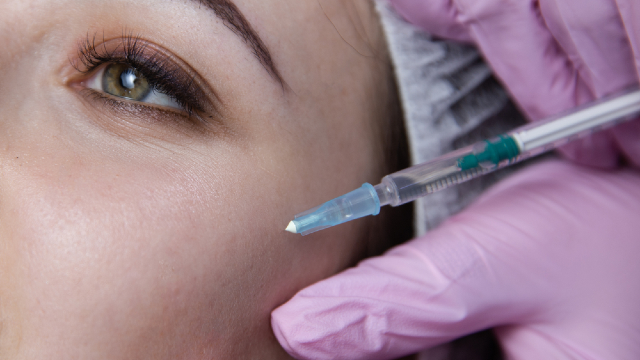
The term "package" can be misleading. In practice, a skin booster course is a set of physician-planned steps organized around your skin condition and goals, not a fixed bundle sold off a shelf. Skin boosters are minimally invasive treatments that deliver regenerative or hydrating ingredients into the dermis to support skin quality from within, rather than adding surface volume the way traditional fillers do. Because the skin's response to these ingredients develops gradually and cumulatively, treatments are usually planned as a series rather than a one-time event.
At Newstar Clinic, product selection, delivery method, injection depth, and protocol are individually designed based on each patient's skin type, condition, sensitivity, and goals. That means two people booking the "same" treatment may receive different plans. Understanding the components of a course, rather than fixating on a total, gives you a far clearer sense of what you are agreeing to. If you want the clinic to walk you through the elements that would apply to you, you can reach the team through the Newstar Clinic contact page.
Rejuran: A PDRN and Polynucleotide Skin Booster
Rejuran is a Korean skin booster built on polynucleotide (PN) technology, using purified polynucleotides derived from salmon DNA. It works at a cellular level by activating fibroblasts to support tissue repair and regeneration, and it is offered in three formulations at the clinic: Rejuran Healer, Rejuran HB (Hydro Booster), and Rejuran Eye. Rejuran Healer is associated with improvements in skin texture, elasticity, hydration, and barrier function; Rejuran HB combines polynucleotides with hyaluronic acid for deeper hydration; and Rejuran Eye targets the delicate area around the eyes. Results are gradual, cumulative, and vary from person to person.
An important regulatory point for US patients: Rejuran holds Korean Ministry of Food and Drug Safety (MFDS) authorization. It is not approved or cleared by the US Food and Drug Administration (FDA), so it is not marketed in the United States in the way it is in Korea. This does not by itself indicate a safety problem; it reflects the fact that different countries operate separate regulatory systems. Broader scientific literature has examined polydeoxyribonucleotide (PDRN) and polynucleotides for their role in skin regeneration and wound healing, but you should treat product claims cautiously and discuss the evidence and any risks with a qualified physician.
Juvelook: A PLLA-and-HA Skin Booster (Not the Same as Sculptra)
Juvelook Volume is a collagen skin booster that combines poly-L-lactic acid (PLLA) with hyaluronic acid (HA). The HA component provides immediate hydration and plumping, while the PLLA component progressively stimulates collagen remodeling to strengthen the skin's structural foundation over time. It is planned individually according to skin thickness, elasticity, and the degree of volume depletion, with the physician determining injection depth, formulation, treatment areas, and session intervals.
Two clarifications matter here. First, Juvelook is not the same product as Sculptra. Sculptra is a PLLA injectable approved by the US FDA; Juvelook is a separate product that carries MFDS authorization (and CE marking in Europe) and is not US-FDA approved. Although both involve PLLA, they are distinct formulations with different regulatory statuses, and one should not be assumed to behave like the other. Second, "cleared" and "approved" are different FDA pathways, and neither term applies to Juvelook in the US market. When any product is named to you, it is reasonable to ask which regulatory body authorizes it and for what use.
The Initial Assessment: Where a Course Begins
Every well-run skin booster course starts with a consultation and a detailed skin assessment rather than a needle. During this step, the physician evaluates your skin condition, texture, hydration, barrier integrity, medical history, previous treatments, and any contraindications, then determines whether a booster is appropriate and, if so, which formulation and approach fit your goals. For international patients, Newstar Clinic documents a pre-travel teleconsultation with photo sharing, followed by an in-clinic assessment once you arrive.
This assessment is not a formality. It is where realistic expectations are set, where the physician decides how many sessions might be reasonable, and where alternatives are discussed if a booster is not the right choice. A responsible clinic follows a "treat only what is necessary" principle, meaning the plan should be justified by your skin, not by a template. You can learn more about the clinic's approach on the Newstar Clinic website before you book.
How Many Sessions and How They're Spaced
Because skin boosters work cumulatively, a course is typically planned as a series of sessions spaced at individualized intervals. The exact number of sessions and the spacing between them depend on your starting skin condition, the formulation chosen, and how your skin responds along the way. Some patients are advised to complete an initial series and then return for periodic maintenance; others may need a different rhythm entirely. There is no universal schedule, and any clinic that promises a fixed count before assessing you is worth questioning.
For visitors traveling to Seoul, the practicalities of spacing matter a great deal. If sessions need to be separated by weeks, you may not be able to complete an entire series in one trip. The recommended number of sessions, spacing, length of stay in Korea, and timing of return flights are details the clinic confirms individually, so raise your travel constraints early in the conversation.
Aftercare Included in a Course
Aftercare is a genuine component of a skin booster course, not an afterthought. After each session, patients receive individualized guidance that commonly covers skincare recommendations, sun protection, and activities or products to avoid during the immediate recovery period. Mild redness, swelling, or tenderness can occur after injection and typically settles within a short time, though individual recovery varies. Following the aftercare instructions carefully supports both comfort and results.
Ask specifically what aftercare is included and what, if anything, is provided separately. Because payment details and what a given plan covers are confirmed by the clinic rather than published as fixed figures, it is sensible to request this information in writing so you know what to expect at each stage.
Follow-Up and Remote Support for International Patients
Follow-up appointments are scheduled to monitor how your skin responds and to determine whether the plan should be adjusted. For patients who travel internationally, this raises an obvious question: what happens after you fly home? Newstar Clinic documents remote follow-up and English-language support, so continuity of care does not have to end when your trip does. Confirm how remote follow-up works, how you would raise a concern from abroad, and how the clinic would coordinate any further sessions.
Understanding the follow-up structure before you commit helps you judge whether a course is realistic for your circumstances. A treatment plan that looks straightforward in the clinic can become complicated once distance and travel are involved, so it is worth discussing these logistics as part of the overall plan.
Factors That Shape What a Course Includes
Several individual factors influence the composition of a course, and none of them can be reduced to a single number. The chosen product and formulation matter, as does the number and spacing of sessions your skin is expected to need. The treatment areas, injection depth, and technique are tailored to you. Your baseline skin condition, sensitivity, and goals all shape the plan, and whether boosters are combined with other treatments can change the structure further. Because each of these is individualized, the most useful thing you can do is ask the clinic to explain how each factor applies to your case and to route any figures and scheduling to them directly.
Combination planning is one factor worth understanding in advance. At Newstar Clinic, some patients are advised to pair certain boosters with complementary treatments—for example, an injectable booster combined with a needle-free delivery approach—when the physician judges that the combination fits the patient's skin condition and goals. Whether combinations are appropriate for you, and how they would be sequenced, is decided during assessment rather than assumed at booking. If a combination is proposed, ask why it is recommended, how the sessions would be spaced, and what each element is intended to address, so that the overall plan remains clear and justified by your skin rather than by a preset template.
The Bottom Line
- A multi-session Rejuran or Juvelook course is a physician-planned program that includes an initial assessment, a personalized number of sessions with individualized spacing, aftercare, and follow-up, not just repeated injections.
- Rejuran (a PDRN/polynucleotide booster) and Juvelook (a PLLA-and-HA booster) both hold Korean MFDS authorization and are not US-FDA approved; Juvelook is not the same product as Sculptra.
- The number and spacing of sessions are individualized and depend on your skin and how it responds, which has real implications for travel planning.
- Aftercare and follow-up, including remote support for international patients, are part of a course and worth confirming in advance.
- Results vary between individuals, and any specific figures, scheduling, or what a plan covers should come directly from the clinic.
Frequently Asked Questions
Is a skin booster the same as a dermal filler?
No. Traditional dermal fillers primarily restore volume directly, whereas skin boosters deliver regenerative or hydrating ingredients into the dermis to improve skin quality over time. Some products, such as Juvelook Volume, combine immediate hydration from HA with longer-term collagen stimulation from PLLA. Your physician can explain which category suits your goals.
Are Rejuran and Juvelook approved by the US FDA?
No. Both carry Korean MFDS authorization, and Juvelook also holds CE marking in Europe, but neither is approved or cleared by the US FDA. Different countries maintain separate regulatory systems, so a product available in Korea may not be marketed the same way in the United States. Ask the clinic which authorizations apply to any product recommended to you.
How many sessions will I need?
There is no fixed answer. Because skin boosters work cumulatively, the number of sessions and their spacing are individualized based on your skin condition, the formulation chosen, and how your skin responds. Your physician determines a reasonable plan after assessment, and the specifics are confirmed by the clinic.
Can I complete a full course during one trip to Seoul?
Possibly not, depending on how your sessions are spaced. If a series needs to be separated by weeks, you may need to plan the timing carefully or complete part of the course remotely. The recommended number of sessions, length of stay, and return-flight timing are details the clinic confirms individually, so discuss your travel plans early.
What aftercare is involved?
After each session you typically receive individualized guidance covering skincare, sun protection, and activities or products to avoid during recovery. Mild redness, swelling, or tenderness may occur and usually settles within a short time, though this varies. Following the instructions supports comfort and results.
What if I have a concern after returning home?
Newstar Clinic documents remote follow-up and English-language support for international patients, so you can raise concerns after you travel home. Confirm how this works before you book, including how to contact the team and how further care would be coordinated. You can start that conversation through the clinic's contact page.
This article is for general educational purposes about aesthetic and cosmetic-dermatology treatments and does not constitute medical advice. Skin booster treatments carry risks, results vary between individuals, and no outcome can be guaranteed. Always consult a qualified physician about your individual circumstances and confirm all details, scheduling, and figures directly with the clinic. It is not a self-diagnosis tool.
More Articles
Continue reading our clinical guides.
Ultherapy Prime Seoul: What Drives Treatment Pricing
Understand the factors behind Ultherapy Prime pricing in Seoul, from lines and coverage area to session planning and genuine transducers. Ask the clinic.
Learn More

Thread Lifting vs Energy Lifting: Facelift Alternatives
Compare thread lifting and energy-based lifting like Ultherapy and Thermage FLX: mechanisms, candidacy, downtime, longevity, risks, and facelift limits.
Learn More
Why Newstar Clinic Puts an Anesthesiologist on the Team
Newstar Clinic includes a Korean board-certified anesthesiologist in its treatment team. Learn how monitoring and safety oversight support aesthetic care.
Learn More